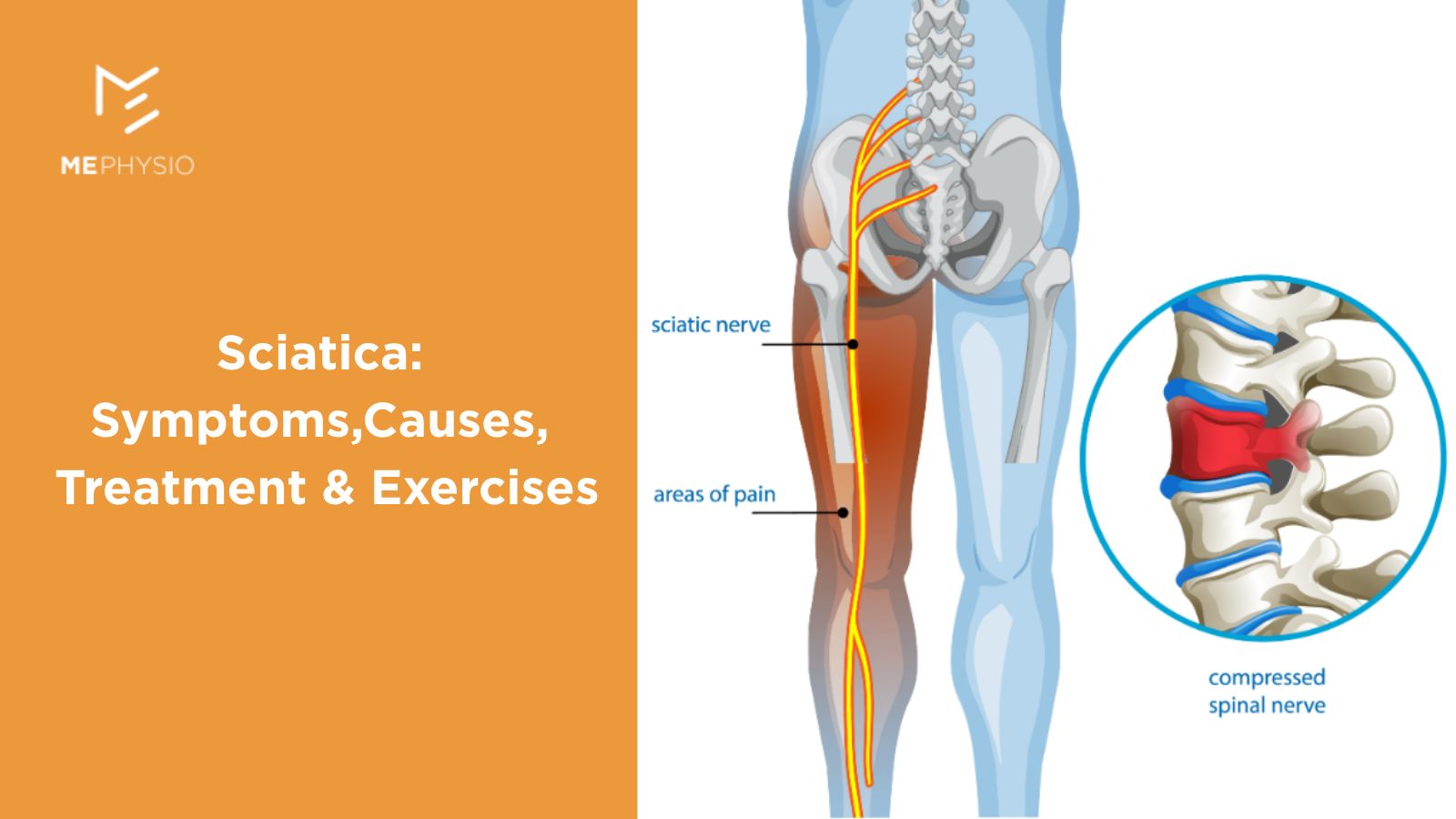
Sciatica: Symptoms, Causes, Treatment & Exercises
What we’ll cover
- Sciatica at a glance
- What Is Sciatica?
- Where Is the Sciatica Nerve?
- Sciatica Symptoms
- Sciatica and hip pain
- What Causes Sciatica?
- Sciatica During Pregnancy
- Is Sciatica Dangerous?
- Sciatica Test: How Is It Diagnosed?
- How to Treat Sciatica
- Stay active, but be sensible
- Physio management of sciatica
- Massage for sciatica
- Heat, medication and other options
- Sciatica Exercises
- Sciatica yoga stretches
- Best Sleeping Position for Sciatica
- What to Avoid With Sciatica
- When Should You See a Physio?
- Sciatica Treatment at ME Physio in Malvern East
- Frequently Asked Questions
- Is sciatica 100% curable?
- What’s the worst thing you can do for sciatica?
- Can sitting too much cause sciatica?
- What can be mistaken for sciatica?
- Can magnesium help with sciatic nerve pain?
- Can sciatica go away on its own?
- Why is sciatica pain worse at night?
- Should I see a GP or a physio for sciatica?
- References
That sharp, burning or tingling pain that runs from your lower back, through your buttock and down your leg can stop you in your tracks. It’s often sciatica, and it’s more common than most people think. The good news is that most cases settle with the right movement, a little patience and the right guidance. This guide covers sciatica symptoms, what’s behind them, how to treat sciatica, the exercises that tend to help, and the warning signs that mean you should get checked sooner.
Sciatica at a glance
- Sciatica is leg pain caused by irritation of the sciatic nerve or its nerve roots in the lower back. It’s a symptom, not a diagnosis in itself.
- Sciatica symptoms usually affect one leg and can include shooting pain, pins and needles, numbness or weakness.
- Staying gently active is usually better than bed rest, and exercises to help sciatica are a core part of recovery.
- Most cases improve without surgery, but some symptoms need urgent care. We cover those below.
What Is Sciatica?
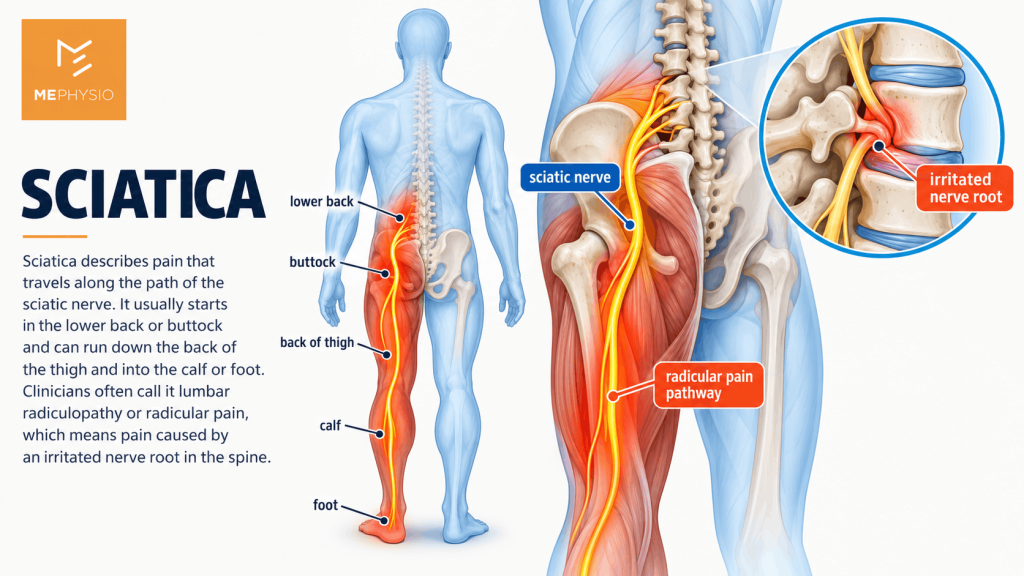
Sciatica describes pain that travels along the path of the sciatic nerve. It usually starts in the lower back or buttock and can run down the back of the thigh and into the calf or foot. Clinicians often call it lumbar radiculopathy or radicular pain, which simply means pain caused by an irritated nerve root in the spine.
Because it’s a pattern of symptoms rather than a condition, the real question is always “what’s irritating the nerve?” Finding that out is what shapes the best treatment.
Where Is the Sciatica Nerve?
People often search for “where is the sciatica nerve”, but the nerve itself is called the sciatic nerve. It’s the longest and thickest nerve in your body. It’s formed by nerve roots that leave the lower spine, then runs deep through the buttock, down the back of the thigh and splits above the knee into branches that supply the lower leg and foot.
That long path explains why sciatica can be felt in so many places. Pain, tingling or numbness might show up in the buttock, back of the thigh, calf, or the outer part of the foot, depending on which nerve root is involved.
Sciatica Symptoms
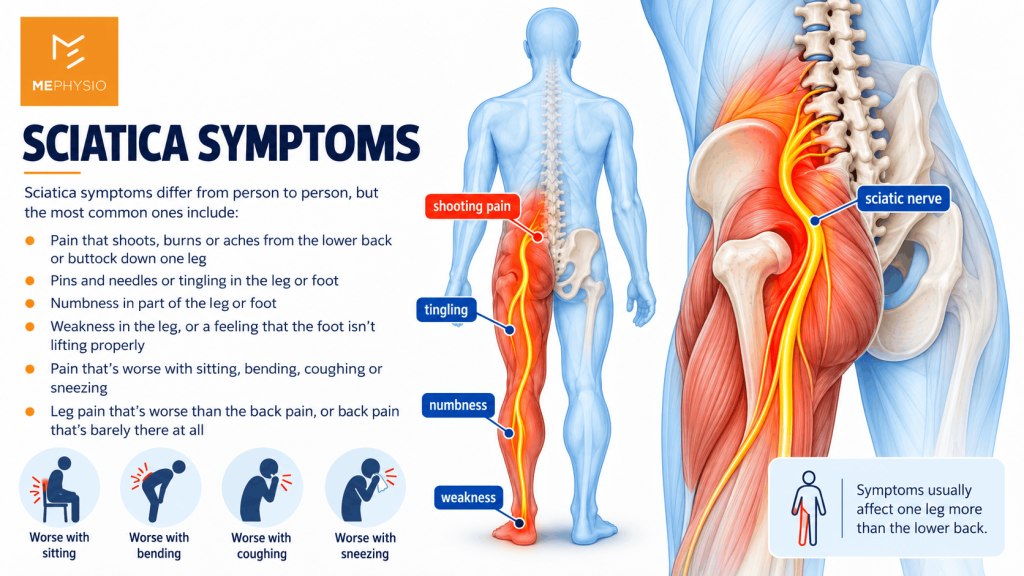
Sciatica symptoms differ from person to person, but the most common ones include:
- Pain that shoots, burns or aches from the lower back or buttock down one leg
- Pins and needles or tingling in the leg or foot
- Numbness in part of the leg or foot
- Weakness in the leg, or a feeling that the foot isn’t lifting properly
- Pain that’s worse with sitting, bending, coughing or sneezing
- Leg pain that’s worse than the back pain, or back pain that’s barely there at all
Sciatica usually affects one side. If both legs are affected, or you notice any of the warning signs further down this page, get urgent medical advice.
Sciatica and hip pain
Buttock and hip pain often travel together with sciatica, which is why the two get mixed up. Sciatica and hip pain can feel similar, but the cause is different. Pain from the hip joint itself, such as osteoarthritis, tends to be felt in the groin or the side of the hip and can make it hard to put on socks or rotate the leg. Sciatica more often travels down the back of the leg below the knee and may bring tingling or numbness.
Tight deep buttock muscles, like the piriformis, can also irritate the nerve and mimic both. A physio can sort out which one you’re dealing with, because the treatment for each is quite different.
What Causes Sciatica?
Sciatica happens when something irritates or compresses the nerve or its roots. Common causes include:
- Disc bulge or herniation: the soft centre of a spinal disc pushes out and presses on a nerve root. This is a leading cause, particularly in younger and middle-aged adults.
- Spinal stenosis: narrowing of the spaces around the nerves, which becomes more common as we get older and is a frequent cause in over-60s.
- Spondylolisthesis: when one vertebra slips forward over the one below it.
- Deep gluteal or piriformis irritation: tight or irritated muscles in the buttock pressing on the nerve.
- Pregnancy: changes in posture, weight and ligament laxity can all contribute.
- Less common causes: bone spurs, cysts, infections or tumours, which is one reason red flags matter.
Can sitting too much cause it? It can certainly aggravate it. Long periods in one position, especially slouched, can load the lower spine and flare things up. Sudden increases in activity, heavy lifting and poor sleep can all be triggers too.
Sciatica During Pregnancy
Sciatica during pregnancy can happen as the growing baby changes your posture and puts extra load through the lower back and pelvis. Hormonal changes also loosen ligaments, which can affect how the spine and pelvis share load.
It’s worth knowing that many women who think they have sciatica during pregnancy actually have pelvic girdle pain, which can feel similar. A proper assessment helps tell the difference. Things that often help include:
- Gentle, regular movement such as walking or water-based exercise
- Sleeping on your side with a pillow between your knees (more on this below)
- A supportive maternity belt, if your physio or midwife recommends one
- Avoiding long periods of standing or sitting in one position
- Treatment from a physio experienced in pregnancy-related back and pelvic pain
Let your midwife or doctor know about your symptoms. Seek urgent care if you have loss of bladder or bowel control, numbness around the groin, or a swollen, painful calf (which can be a blood clot).
Is Sciatica Dangerous?
For most people, no. Sciatica is painful and disruptive, but it’s usually not dangerous and most cases improve with conservative care. So, is sciatica dangerous? Occasionally, the answer is yes, because sometimes the nerve compression is serious.
Get urgent medical help, and head to your nearest emergency department if you notice:
- New difficulty passing urine, or loss of bladder or bowel control
- Numbness around the groin, inner thighs or genitals
- Weakness or numbness in both legs, or weakness that’s getting worse quickly
- A foot that suddenly drags or slaps down when you walk
- Severe, unrelenting pain, especially at night
- Fever, unexplained weight loss, or a history of cancer
- Sciatica following a significant fall or accident
Sciatica Test: How Is It Diagnosed?
You can’t reliably self-diagnose sciatica at home, so a proper sciatica test means a hands-on assessment. Your physio or GP will ask about your symptoms and then check:
- Nerve tests: like the straight leg raise and slump test, which gently tension the sciatic nerve to see if they reproduce your leg pain
- Strength, reflexes and sensation: checking whether the nerve is affecting muscle power or feeling in the leg
- Movement and posture: how your spine, hips and pelvis move, and what eases or aggravates your pain
Do you always need a scan? Not usually. Most people with sciatica don’t need an MRI or CT at the start, and the results often don’t change early treatment. Imaging becomes more useful if you have red flags, significant weakness, or symptoms that aren’t improving after several weeks.
Other conditions can look like sciatica, including hip osteoarthritis, sacroiliac joint pain, facet joint pain and hamstring problems, which is another reason a proper assessment matters.
How to Treat Sciatica
If you’re wondering how to treat sciatica, the most reliable approach is to calm things down first and then gradually rebuild your strength and confidence with movement. To treat sciatica well, it helps to understand what’s driving it, because the right plan for a disc problem can differ from the right plan for spinal stenosis.
Stay active, but be sensible
Bed rest used to be the standard advice, but we now know it tends to slow recovery. Keep moving within your comfort zone. Short, regular walks are usually a good start. Adjust the things that aggravate your pain, like prolonged sitting or heavy lifting, rather than stopping everything.
Physio management of sciatica
A good management of sciatica plan is tailored to you and may include:
- Education about what’s going on, so you feel in control
- Graded sciatica exercises to strengthen the back, hips and legs
- Gentle nerve mobilisation techniques when appropriate
- Hands-on treatment to ease tight muscles and stiff joints
- Advice on sitting, sleeping, lifting and returning to your usual activities
Massage for sciatica
Massage for sciatica can provide short-term relief by easing tight muscles in the lower back and buttock, particularly if deep gluteal or piriformis tension is part of the picture. Think of it as a helpful add-on rather than a standalone fix, because it works best alongside exercise and movement. Avoid very deep pressure directly over a sore, irritated nerve, and let your therapist know if you’re pregnant.
Heat, medication and other options
A heat pack can ease muscle tension and make movement more comfortable. If you’re thinking about pain relief medication, have a chat with your GP or pharmacist first, because what’s suitable depends on you. If symptoms stick around despite good rehab, your GP may discuss other options such as injections or referral to a specialist. Surgery is uncommon and is generally kept for significant or worsening nerve problems, or pain that hasn’t improved with conservative care.
Many people notice improvement within about 4 to 8 weeks, but it varies, and some take longer.
Sciatica Exercises
Well-chosen sciatica exercises keep you moving, reduce stiffness and gradually build the strength that protects your back. The best exercises to help sciatica depend on what’s causing it, so it’s worth getting assessed before starting a program. As a general guide, here are some gentle options many people find useful:
- Walking. Often the best place to start. Begin with short, comfortable walks and build up gradually.
- Pelvic tilts. Lie on your back with knees bent. Gently flatten your lower back into the floor, hold for a few seconds, then relax. Repeat about 10 times.
- Glute bridges. From the same position, squeeze your buttocks and lift your hips until your body forms a straight line from shoulders to knees. Lower slowly. Aim for two sets of about 10.
- Single knee to chest. Lying on your back, gently draw one knee towards your chest and hold for 20 to 30 seconds. Repeat a few times on each side.
- Seated nerve glide. Sit tall on a chair. Slowly straighten the knee of your sore leg while lifting your chin, then bend the knee as you lower your chin. Do about 10 gentle repetitions. You should feel a mild stretch at most, not sharp pain.
- Figure-four stretch. Lying on your back with knees bent, cross the ankle of your sore leg over the opposite knee and gently draw the legs towards you. Hold for 20 to 30 seconds.
A useful rule: if your leg symptoms spread further down the leg during an exercise, or stay worse afterwards, ease off and check in with your physio. Symptoms moving back towards the spine is generally a good sign.
Sciatica yoga stretches
Some people find gentle sciatica yoga stretches helpful for easing tension and stiffness. Good options to try include:
- Cat-cow: gentle movement through the spine on hands and knees
- Child’s pose: with your knees wide, sitting back only as far as is comfortable
- Reclined figure-four: the same movement as the figure-four stretch above, done slowly
- Gentle supine twist: a small, relaxed rotation with your knees bent
Go gently with sciatica yoga stretches and skip anything that increases leg pain. Deep seated forward folds, aggressive hamstring stretching and big twists can aggravate a sensitive nerve, particularly during a flare-up. If you’re pregnant, choose a pregnancy-specific class or ask your physio first.
Best Sleeping Position for Sciatica
Poor sleep and sciatica often feed each other, so it’s worth setting yourself up well. The best sleeping position for sciatica is the one that keeps your spine and hips comfortably supported, and most people find one of these works:
- On your side, with a pillow between your knees. This keeps the hips and pelvis level and takes pressure off the lower back. Try the pain-free side if one side is sore.
- On your back, with a pillow under your knees. This lets the lower back rest in a more relaxed position.
- Pregnant? Lie on your side with a pillow between your knees, and another under your belly if that’s more comfortable.
Sleeping on your stomach tends to arch the lower back and doesn’t suit everyone with sciatica. A medium-firm mattress is comfortable for many people. When you get out of bed, roll onto your side and push yourself up with your arms rather than sitting straight up.
What to Avoid With Sciatica
- Prolonged bed rest. Too much rest can leave you stiffer and slower to recover.
- Sitting for hours without a break. Stand up and move every 30 minutes or so.
- Heavy lifting with bending and twisting. Bend your knees and keep the load close.
- Aggressive stretching. Pulling hard on tight hamstrings or the buttock can irritate the nerve.
- Pushing through spreading or worsening leg pain. Back off and get advice.
When Should You See a Physio?
See a physio if your sciatica symptoms haven’t started to improve after a week or two, if the pain keeps coming back, or if it’s affecting your sleep, work or ability to walk. If you ever notice any of the red flags listed above, seek urgent medical care first.
Sciatica Treatment at ME Physio in Malvern East
At ME Physio, we help people of all ages get on top of sciatica, including older adults who want to stay active and keep doing what they love. We’ll take the time to work out what’s irritating your nerve, explain it in plain English and build a plan that suits your body and your lifestyle. That might include hands-on treatment, a tailored program of sciatica exercises, strength and conditioning work, or hydrotherapy, which offers a gentle, low-impact way to keep moving. We also offer home visits for people who find it hard to get to the clinic.
If you’ve got sciatica that hasn’t settled, or you’re not sure whether it’s sciatica or something else, book in at our Malvern East or Caulfield South clinic. Give us a call on (03) 9571 6888 or book through our website.
Frequently Asked Questions
Is sciatica 100% curable?
Most episodes settle with time and the right care, but there’s no guarantee it won’t return. Staying strong, moving regularly and managing the things that trigger your pain all help reduce the chance of a repeat.
What’s the worst thing you can do for sciatica?
Staying in bed for long stretches, or pushing through pain that’s spreading down your leg. Gentle, regular movement within your comfort zone is usually better.
Can sitting too much cause sciatica?
Long periods of sitting can load the lower back and aggravate symptoms, especially if you slouch. Regular breaks and changing position help.
What can be mistaken for sciatica?
Hip joint problems, sacroiliac joint pain, facet joint pain, deep buttock muscle tightness and hamstring issues can all feel similar. A physio can tell them apart.
Can magnesium help with sciatic nerve pain?
The evidence is limited. If you’re thinking about supplements, check with your GP or pharmacist first, particularly if you have kidney problems or take other medications.
Can sciatica go away on its own?
Many cases of sciatica improve on their own over several weeks, especially when you stay gently active. Recovery is often quicker and more confident with the right guidance, and a physio can help if symptoms are slow to settle or keep coming back. Get urgent medical care if you have loss of bladder or bowel control, numbness around the groin, or weakness in both legs.
Why is sciatica pain worse at night?
Sciatica can feel worse at night because lying still for long periods can stiffen the lower back, and some positions put more pressure on the irritated nerve. Fewer distractions also make pain more noticeable. Sleeping on your side with a pillow between your knees, or on your back with a pillow under your knees, often helps. Severe, unrelenting night pain should be checked by a doctor promptly.
Should I see a GP or a physio for sciatica?
You can see a physio for sciatica without a GP referral in Australia. A physio can assess what is irritating the nerve, check your strength and sensation, and build a treatment plan with you. See your GP if you need advice on pain medication, if symptoms aren’t improving, or if you notice warning signs such as loss of bladder or bowel control.
References
- https://mephysio.com.au/blog/can-expect-physiotherapy-low-back-pain/ | What to Expect from Physio for Low Back Pain | 18 September 2026 | Jason Lee, ME Physio
- https://mephysio.com.au/blog/hip-pain-causes-relief-when-to-see-a-physio/ | Hip Pain: Causes, Relief & When to See a Physio | 12 October 2026 | ME Physio
- https://mephysio.com.au/blog/manual-therapy/ | Manual therapy: Pain relief and enhanced mobility | 12 February 2026 | Jason Lee, ME Physio
- https://mephysio.com.au/blog/benefits-of-walking/ | Benefits of Walking: Physical & Mental Health | 18 September 2026 | Jason Lee, ME Physio
- https://www.healthdirect.gov.au/sciatica | Sciatica: treatment, symptoms and causes | Last reviewed December 2024 | Healthdirect Australia
- https://www.safetyandquality.gov.au/standards/clinical-care-standards/low-back-pain-clinical-care-standard | Low Back Pain Clinical Care Standard | 1 September 2022 | Australian Commission on Safety and Quality in Health Care
- https://www.nice.org.uk/guidance/ng59 | Low back pain and sciatica in over 16s: assessment and management (NG59) | Published 30 November 2016, updated 11 December 2020 | National Institute for Health and Care Excellence
- https://doi.org/10.1136/bmj.39223.428495.BE | Diagnosis and treatment of sciatica, BMJ 334(7607): 1313-1317 | 2007 | Bart W. Koes, Maurits W. van Tulder, Wilco C. Peul