What we’ll cover
- What Is Intercostal Muscle Strain?
- Causes and Symptoms of Intercostal Muscle Strain
- Causes
- Symptoms
- Diagnosis
- Treatment for Intercostal Muscle Strain
- When to Seek Specialist Help
- Physical Therapy, Medical Management, and Injectable Treatments
- Recovery Time
- What Is the Fastest Way to Heal Intercostal Muscle Strain
- Typical Intercostal Muscle Strain Recovery Time
- Exercises for Intercostal Muscle Strain Rehab
- Safe Stretching and Strengthening Exercises
- How to Sleep with Intercostal Muscle Strain
- How ME Physio Can Help
What Is Intercostal Muscle Strain?
Intercostal muscle strain occurs when the muscles between your ribs become overstretched or torn. These intercostal muscles span the spaces between your ribs and play essential roles in breathing, stabilising your chest wall, and allowing torso movement. When strained, these muscles can cause significant pain that worsens with breathing, coughing, or twisting movements.
The intercostal muscles consist of three layers: the external intercostals, internal intercostals, and innermost intercostals. Each layer works during respiration, with the external intercostals lifting the ribs during inhalation, whilst the internal intercostals assist with exhalation. Because these muscles move with every breath, strained intercostal muscles can be notoriously painful and slow to heal.
Understanding rib intercostal muscle strain helps you recognise the injury early and seek appropriate treatment. These strains commonly affect athletes and active individuals but can occur during everyday activities like reaching overhead, coughing forcefully, or lifting heavy objects.
Causes and Symptoms of Intercostal Muscle Strain
Causes
Several mechanisms can cause intercostal muscle strain:
- Sudden twisting movements: Sports like golf, tennis, cricket, and rowing involve forceful torso rotation that can overstretch these muscles
- Direct trauma: Falls, car accidents, or contact sports can force ribs apart suddenly, tearing intercostal muscles
- Reaching overhead: Prolonged activities above shoulder height, such as painting ceilings or lifting heavy items, place excessive stress on the muscles
- Repetitive motions: Activities involving repeated arm swinging or torso twisting can gradually strain intercostal muscles over time
- Severe coughing: Intense or prolonged coughing episodes can overwork these muscles, particularly in people with respiratory conditions
- Poor conditioning: Weak or inflexible intercostal muscles are more susceptible to injury during physical activity
Symptoms
Intercostal muscle strain symptoms vary depending on injury severity but typically include:
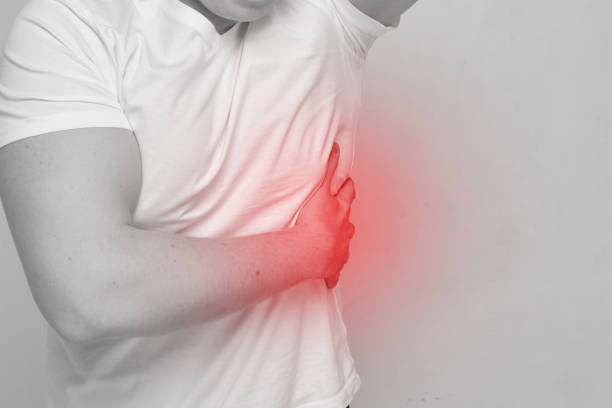
- Sharp pain in the rib cage: Often localised to the affected area, worsening with movement, deep breathing, coughing, or sneezing
- Gradual pain onset: Some strains develop slowly over days or weeks with repetitive stress
- Muscle tension and stiffness: The affected area feels tight, limiting your ability to twist or bend your torso
- Tenderness to touch: Direct pressure on the strained area causes discomfort
- Difficulty breathing deeply: Pain often forces shallow breathing patterns to avoid discomfort
- Visible swelling: The area between ribs may appear swollen or inflamed
- Muscle spasms: The strained muscle may contract involuntarily, causing sharp, stabbing sensations
Symptoms of intercostal muscle strain can mimic more serious conditions like rib fractures or cardiac issues. The key distinction is that intercostal strain pain remains localised and worsens with specific movements rather than being constant.
Diagnosis
Healthcare providers diagnose intercostal muscle strain through clinical assessment:
- Medical history: Your physiotherapist will ask about injury mechanism, symptom onset, and activities that worsen pain
- Physical examination: Palpation identifies tender areas, muscle defects, and pain patterns
- Movement testing: Active trunk rotation, side bending, and breathing assessments reveal functional limitations
- Imaging (when necessary): X-rays rule out rib fractures, whilst MRI or ultrasound may confirm severe muscle tears or identify complications like haematomas
Thorough screening is essential as chest pain can indicate serious conditions requiring immediate medical attention. Your physiotherapist will ensure your symptoms match intercostal strain before proceeding with treatment.
Treatment for Intercostal Muscle Strain
Treatment of intercostal muscle strain begins with conservative management focused on pain relief and protecting the injured area:
- Initial rest (first 48-72 hours): Avoid activities that increase pain, particularly twisting, reaching, or heavy lifting
- Ice therapy: Apply cold packs for 15-20 minutes every 2-3 hours during the first two days to reduce inflammation
- Heat therapy (after 48 hours): Transition to heat application for 15-30 minutes to relax tight muscles and improve blood flow
- Pain management: Over-the-counter anti-inflammatory medications can provide relief, though consult your GP before use
- Breathing support: Holding a pillow against your chest during deep breathing or coughing can stabilise the area and reduce pain
- Avoid compression wrapping: Unlike other muscle strains, wrapping the chest can restrict breathing and worsen the injury
When to Seek Specialist Help
Most intercostal strains improve with conservative care, but some situations require professional intervention:
- Pain that doesn’t improve after one week of rest
- Increasing pain or swelling despite treatment
- Severe difficulty breathing or shortness of breath
- Chest pain that feels different from typical muscle strain
- Signs of complications like persistent bruising or visible deformity
Physical Therapy, Medical Management, and Injectable Treatments
Physiotherapy plays a vital role in intercostal strain rehabilitation:
- Manual therapy: Soft tissue massage releases tension in surrounding muscles, improves circulation, and reduces inflammation
- Joint mobilisation: Gentle techniques restore normal rib and thoracic spine movement
- Breathing exercises: Controlled breathing patterns maintain lung capacity whilst minimising pain
- Progressive loading: Gradual reintroduction of movement and strengthening exercises promotes proper healing
For severe cases, additional medical interventions may include:
- Muscle relaxants: Prescribed medications can reduce muscle spasms that complicate recovery
- Intercostal nerve blocks: Local anaesthetic injections provide temporary pain relief for severe strains, allowing participation in physiotherapy
- Corticosteroid injections: Anti-inflammatory injections may accelerate healing in persistent cases
Recovery Time
What Is the Fastest Way to Heal Intercostal Muscle Strain
The fastest way to heal intercostal muscle strain involves a balanced approach combining rest, appropriate treatment, and progressive rehabilitation:
- Prioritise rest initially: Allow inflammation to settle during the first few days without complete immobilisation
- Manage pain effectively: Adequate pain control enables better breathing and prevents compensatory patterns
- Maintain gentle movement: Complete rest can lead to stiffness. Perform pain-free movements within tolerance
- Practice proper breathing: Use diaphragmatic breathing to maintain lung capacity without straining intercostals
- Progress exercises gradually: Follow a structured rehabilitation program to rebuild strength and flexibility
- Address contributing factors: Work with your physiotherapist to correct posture, strengthen core muscles, and improve flexibility
Typical Intercostal Muscle Strain Recovery Time
Intercostal muscle strain recovery time varies based on severity:
- Mild strains (Grade 1): 2-3 weeks with proper management. Pain may persist during deep breathing but daily activities remain possible
- Moderate strains (Grade 2): 4-6 weeks for adequate healing. Partial muscle tears require extended rest and careful progression
- Severe strains (Grade 3): 8-12 weeks or longer. Complete muscle tears may need extended rehabilitation, and occasionally surgical repair
Individual factors influence healing timelines. Athletes returning to high-demand sports typically need longer rehabilitation to prevent reinjury. Age, overall fitness, adherence to treatment protocols, and previous injury history all affect recovery duration.
Exercises for Intercostal Muscle Strain Rehab
Safe Stretching and Strengthening Exercises
Begin exercises only after initial pain and inflammation have subsided, typically 3-5 days post-injury. Always stop if sharp pain occurs:
Breathing Exercises (Start immediately):
- Diaphragmatic breathing: Sit or stand with good posture. Place one hand on your chest, the other on your abdomen. Breathe slowly through your nose, expanding your abdomen whilst keeping your chest relatively still. Exhale slowly through pursed lips. Repeat 5-10 times, several times daily
- Deep breathing with pillow support: Hold a pillow against your chest. Take progressively deeper breaths, using the pillow for support and comfort
Gentle Stretching (After 5-7 days):
- Side-bending stretch: Stand with feet shoulder-width apart. Slowly raise one arm overhead and gently lean to the opposite side. Hold 15-20 seconds. Repeat 3-4 times on each side
- Seated forward stretch: Sit with one leg straight, the other bent. Lean forward over the straight leg, rotating your torso slightly. Feel the stretch along your back intercostals. Hold 15-20 seconds, repeat 3 times on each side
- Doorway chest stretch: Place your forearm against a doorframe. Gently rotate your body away from the arm until you feel a mild stretch across your chest. Hold 20-30 seconds, repeat 3 times
Strengthening Exercises (After 2-3 weeks):
- Arm raises: Lying on your back, slowly raise both arms overhead. Lower with control. Start with 5-10 repetitions, progress as tolerated
- Thoracic rotation: Lying on your side with knees bent, extend your top arm and rotate your upper body, opening your chest. Return slowly. Perform 10 repetitions on each side
- Core stabilisation: Gentle planks and side planks help stabilise the ribcage. Begin with 10-15 second holds, gradually increasing duration
- Resistance band exercises: Light resistance band rows and chest presses strengthen surrounding muscles. Focus on control rather than weight
How to Sleep with Intercostal Muscle Strain
Comfortable sleep positioning is crucial for recovery:
- Elevated upper body: Sleep with your upper body elevated using pillows or a wedge pillow, especially during the first few days. This reduces pressure on the ribs and eases breathing
- Back sleeping: Lie flat with a pillow under your head and another under your knees. This maintains neutral spine alignment and minimises chest wall pressure
- Side sleeping: If you prefer to sleep on your side, lie on the unaffected side. Place a pillow between your knees and consider hugging a body pillow for chest support
- Avoid stomach sleeping: This position twists your spine and compresses the chest, aggravating the injury
- Move slowly: When getting in and out of bed, avoid twisting. Roll onto your side first, then use your arms to push yourself up
How ME Physio Can Help
ME Physio offers support in treatment for rib intercostal muscle pain and recovery. Our physiotherapists assess your condition, identify contributing factors, and develop personalised treatment plans addressing your specific needs.