Poor Posture: Causes, Symptoms, Exercises and How to Fix It
What we’ll cover
- What Is Poor Posture?
- 4 Signs of Poor Posture
- Poor Posture Symptoms
- 5 Health Issues Affected by Poor Posture
- Poor Posture Neck Hump and Rounded Shoulders
- Can Poor Posture Cause Headaches?
- Can Poor Posture Affect the Vagus Nerve?
- Exercises to Improve Poor Posture
- Back Exercises for Poor Posture
- Neck Exercises for Poor Posture
- Stretches for Poor Posture
- Back Brace, KT Tape, and Yoga for Poor Posture
- Can You Fix Poor Posture?
- When to See a Physiotherapist for Poor Posture
- Frequently Asked Questions
- What are the most common signs of poor posture?
- Can poor posture cause headaches?
- How long does it take to fix poor posture?
- Is a back brace good for poor posture?
- Can poor posture affect your breathing?
- Does yoga help with poor posture?
Poor posture has become one of the most widespread physical complaints of modern life. Between desk jobs, smartphones, and increasingly sedentary lifestyles, more people than ever are living with rounded shoulders, a forward head, and a chronically aching neck or back. Whether you are an office worker, an older adult noticing changes in your stance, or a student spending hours hunched over a screen, poor posture affects how you feel, move, and function every day.
What Is Poor Posture?
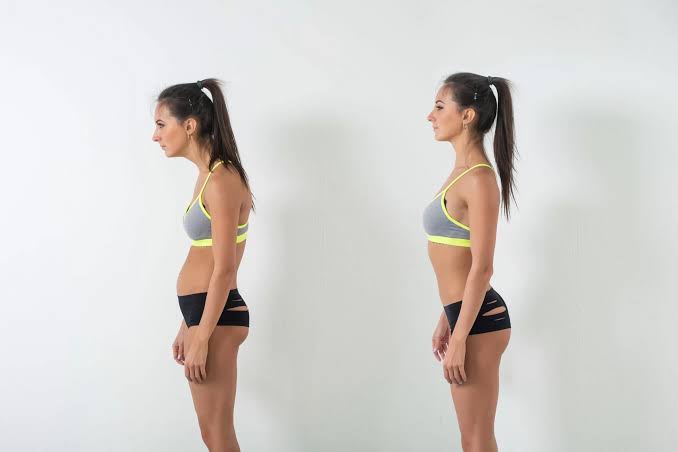
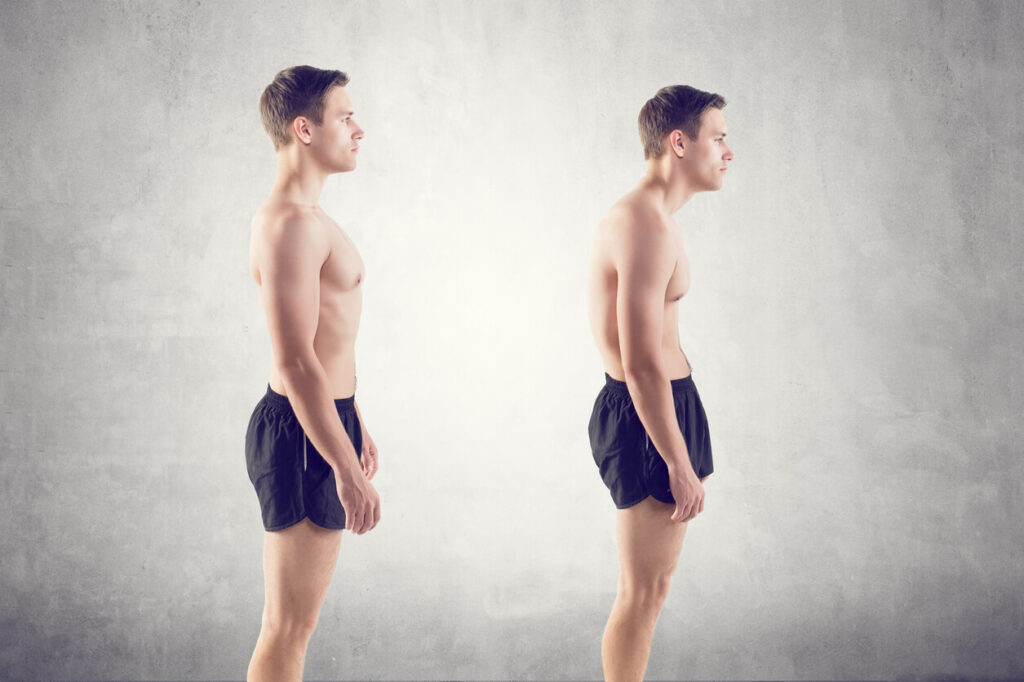
Posture refers to the position in which you hold your body while standing, sitting, or moving. Good posture means your ears sit directly above your shoulders, your shoulders sit above your hips, your spine holds its natural curves, and your muscles are working with minimal effort. Poor posture describes the opposite: a forward head position, rounded shoulders, an arched lower back, or uneven hips.
The key thing to understand is that poor posture is rarely a single, fixed problem. It is almost always a pattern of habits and muscle imbalances that build up gradually over time. Clinically, it matters because sustained misalignment places uneven load on joints, muscles, and nerves, leading to pain, reduced mobility, and a higher risk of injury.
10 Causes of Poor Posture
Most cases of poor posture involve several contributing factors at once rather than a single cause.
- Prolonged sitting at a desk or computer, which encourages the spine to round and the head to drift forward over time.
- Smartphone and tablet use, sometimes called text neck, where looking down repeatedly compresses the cervical spine.
- Weak core and spinal stabiliser muscles, leaving the spine without adequate active support.
- Tight chest and hip flexor muscles, which pull the body into a rounded, forward-flexed position.
- A poorly set up workstation, where screen height, chair height, or keyboard position forces the body into awkward angles.
- Carrying heavy bags on one shoulder, which creates lateral imbalances through the neck and upper back.
- Sleeping in unsupported positions, particularly on the stomach, which rotates the neck and stresses the lumbar spine.
- A sedentary lifestyle with low overall physical activity, reducing the endurance and tone of postural muscles.
- Pain avoidance, where the body unconsciously shifts its position to protect a sore area, creating compensatory strain elsewhere.
- Age-related changes, including reduced muscle mass, bone density changes, and decreased flexibility, which make maintaining upright posture more demanding.
4 Signs of Poor Posture
These four signs frequently appear together as a combined postural pattern rather than in isolation.
- Forward head position, where the ears sit in front of the shoulders rather than directly above them, adding significant load to the cervical spine.
- Rounded shoulders, where the shoulder blades wing outward, the chest narrows, and the upper back curves forward.
- Increased thoracic kyphosis, commonly called a neck hump or dowager’s hump, where the upper thoracic spine shows an exaggerated outward curve.
- Anterior pelvic tilt, where the lower back arches forward, the pelvis tips down at the front, and the stomach appears to protrude.
Poor Posture Symptoms
Signs are what a clinician observes; symptoms are what you experience. Common poor posture symptoms include neck pain and stiffness, upper back aching and tension, lower back pain, headaches at the base of the skull, shoulder pain and reduced shoulder mobility, jaw pain and temporomandibular joint tension, fatigue from muscles working harder than they should, and reduced lung capacity from a compressed chest position.
Symptoms are typically worse after sustained sitting or prolonged screen time and improve temporarily with movement or stretching, though they return without addressing the underlying cause.
5 Health Issues Affected by Poor Posture
- Chronic neck and back pain. Sustained misalignment compresses spinal joints and overloads surrounding muscles, driving the most common postural complaint seen in clinical practice.
- Tension headaches. Forward head posture increases the effective load on the cervical spine, overworking suboccipital muscles and referring pain upward into the head.
- Breathing dysfunction. Rounded shoulders compress the thoracic cavity, reducing the room available for the lungs to fully expand on inhalation.
- Digestive issues. Sustained slumped sitting compresses the abdominal organs and can impair gut motility and digestion over time.
- Poor balance and increased fall risk. Particularly relevant for older adults, altered centre of gravity from postural changes increases instability and the likelihood of falls. For ME Physio’s over-60s patients, this is one of the most clinically important consequences of uncorrected posture.
Poor Posture Neck Hump and Rounded Shoulders
The neck hump, also known as a dowager’s hump or buffalo hump, is a combination of forward head posture, increased upper thoracic kyphosis, and sometimes a localised fat pad accumulation at the C7 vertebra. It is important to distinguish between a postural neck hump, which is generally reversible with the right treatment, and a structural one, which is less reversible and more common in people with advanced osteoporosis.
Rounded shoulders develop when the scapulae become protracted, the pectorals tighten, and the mid-back muscles weaken and lengthen. Both conditions frequently occur together and both respond well to physiotherapy-guided exercise, particularly when identified early. With the right approach, improvement is achievable at any age.
Can Poor Posture Cause Headaches?
Yes. Poor posture is one of the most common and under-recognised causes of cervicogenic headaches, meaning headaches that originate from the cervical spine rather than within the head itself.
The mechanism is straightforward: for every inch the head moves forward from its neutral position, the effective load on the cervical spine roughly doubles. This chronically overloads the suboccipital muscles at the base of the skull, which then refer pain upward into the head. Posture-related headaches are typically felt at the base of the skull, behind the eyes, or across the temples, and they tend to worsen through the day or after extended screen time.
They are distinct from migraine and standard tension-type headaches, and they respond well to physiotherapy that addresses cervical spine mechanics, muscle balance, and movement patterns.
Can Poor Posture Affect the Vagus Nerve?
This question is increasingly asked, and it deserves a careful, measured answer.
The vagus nerve is the longest cranial nerve in the body, running from the brainstem down through the neck and into the thorax and abdomen. It plays a central role in regulating heart rate, digestion, and the stress response. Forward head posture and upper cervical compression may mechanically tension or compress the vagus nerve as it passes through the neck, potentially contributing to symptoms such as digestive discomfort, changes in heart rate variability, and altered stress response regulation.
The research in this area is still emerging and should not be overstated. However, the anatomical relationship is real, and anyone experiencing unusual symptoms alongside significant postural problems warrants a thorough physiotherapy assessment.
Exercises to Improve Poor Posture
Back Exercises for Poor Posture
Thoracic extension over a foam roller: lie over the roller at the mid-back and extend gently into extension. Hold for 30 seconds, repeat three times.
Prone Y-T-W raises: lie face down and lift arms into Y, T, and W shapes to activate the mid and lower trapezius. Three sets of 10 in each position.
Seated row with resistance band: pull the band toward the lower ribs, hold for two seconds, then return slowly. Three sets of 15.
Superman hold: lie face down and lift the opposite arm and leg simultaneously. Hold for five seconds. Three sets of 10 each side.
Neck Exercises for Poor Posture
Chin tucks: gently retract the chin to create a double-chin position and hold for five seconds. Three sets of 10. This is the single most effective exercise for forward head posture.
Cervical deep neck flexor activation: while lying flat, gently nod the chin without lifting the head. Hold for 10 seconds. Three sets of 10.
Neck side flexion stretch: tilt the ear toward the shoulder and hold for 30 seconds each side. Three sets.
Levator scapulae stretch: rotate the head 45 degrees and look down toward the armpit, hold for 30 seconds. Three sets each side.
If any exercise causes sharp pain, stop and consult a physiotherapist before continuing.
Stretches for Poor Posture
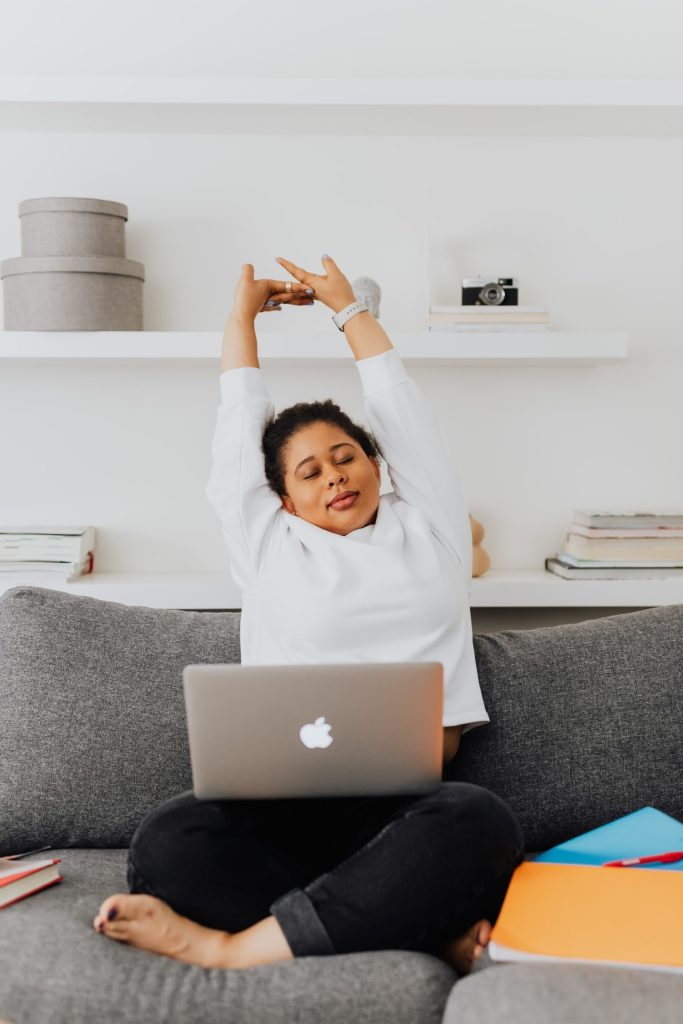
Where strengthening exercises build the muscles that hold good posture, stretching targets the tight muscles that are pulling the body out of it. For a supervised, structured approach to postural strengthening, Clinical Pilates at ME Physio is specifically designed to address muscle imbalances and build the deep stabilisers that support good posture
Doorframe chest stretch: place forearms on a doorframe at shoulder height and lean gently through. Hold 30 seconds, three repetitions.
Upper trapezius stretch: tilt the ear to the shoulder while pressing the opposite hand toward the floor. Hold 30 seconds each side.
Hip flexor lunge stretch: move into a deep lunge, tuck the pelvis under, and hold. Thirty seconds each side, three sets.
Thread the needle thoracic rotation: on hands and knees, thread one arm under the body to rotate the thoracic spine. Ten repetitions each side.
Suboccipital release: place two fingers at the base of the skull and apply gentle upward pressure. Hold 30 to 60 seconds.
Back Brace, KT Tape, and Yoga for Poor Posture
A back brace has legitimate short-term uses: postural reminders during long periods of sitting, post-surgical recovery, and management of significant spinal instability. The important caveat is that wearing a brace long-term without also strengthening the supporting muscles can worsen posture by reducing proprioceptive feedback and creating muscle dependency. It works best as a temporary tool alongside a structured exercise program.
Kinesio tape applied across the mid-back and shoulders provides sensory feedback that cues the wearer toward a more upright position. It does not mechanically hold posture in place; it works through increased body awareness. It is most effective combined with exercise, and correct application by a physiotherapist is recommended.
Yoga is one of the most accessible tools for improving posture over time. The most helpful poses include cat-cow for spinal mobility, cobra and upward dog for thoracic extension, warrior poses for hip flexor lengthening, and child’s pose for thoracic decompression. Those with significant spinal conditions should consult a physiotherapist before starting a yoga program.
Can You Fix Poor Posture?
Yes. In most cases, poor posture can be significantly improved, and for many people, it can be fully corrected.
How much improvement is achievable depends on age, how long the postural habit has been present, whether structural changes have occurred, and how consistently the rehabilitation program is followed. Most people notice meaningful change within four to eight weeks of a consistent program. More substantial postural correction typically takes three to six months.
The key message: passive approaches like bracing or taping alone will not fix poor posture. Lasting correction requires active muscle retraining and genuine habit change. For older adults, it is never too late to improve, and even partial correction produces meaningful reductions in pain and fall risk.
When to See a Physiotherapist for Poor Posture
Consider booking an assessment if you have persistent neck or back pain that is not resolving, headaches that keep coming back, noticeable changes in your posture such as a neck hump or significant rounding, or posture that is affecting your ability to carry out daily activities.
A physiotherapy assessment for posture includes postural analysis, muscle length and strength testing, movement assessment, and identification of the contributing factors specific to you. Treatment may include manual therapy, dry needling, targeted exercise prescription, taping, and ergonomic advice.
Frequently Asked Questions
What are the most common signs of poor posture?
The four most common signs are forward head position, rounded shoulders, increased upper thoracic kyphosis (the neck hump), and anterior pelvic tilt. These frequently appear together as a combined pattern.
Can poor posture cause headaches?
Yes. Forward head posture overloads the suboccipital muscles at the base of the skull, which refer pain into the head. These cervicogenic headaches typically worsen through the day and respond well to physiotherapy.
How long does it take to fix poor posture?
Most people notice improvement within four to eight weeks of a consistent program. More significant postural correction generally takes three to six months, depending on the severity and duration of the postural habit.
Is a back brace good for poor posture?
A brace can be useful as a short-term postural reminder, but it should not be used as a long-term solution. Without strengthening the supporting muscles alongside brace use, it can reduce proprioception and create muscle dependency over time.
Can poor posture affect your breathing?
Yes. Rounded shoulders compress the thoracic cavity, reducing the room available for the lungs to fully expand. Many people notice improved breathing capacity as their posture improves.
Does yoga help with poor posture?
Yoga is one of the most effective accessible tools for improving posture over time. Poses like cat-cow, cobra, warrior, and child’s pose address thoracic mobility, hip flexor tightness, and spinal extension. Those with existing spinal conditions should seek advice from a physiotherapist first.